
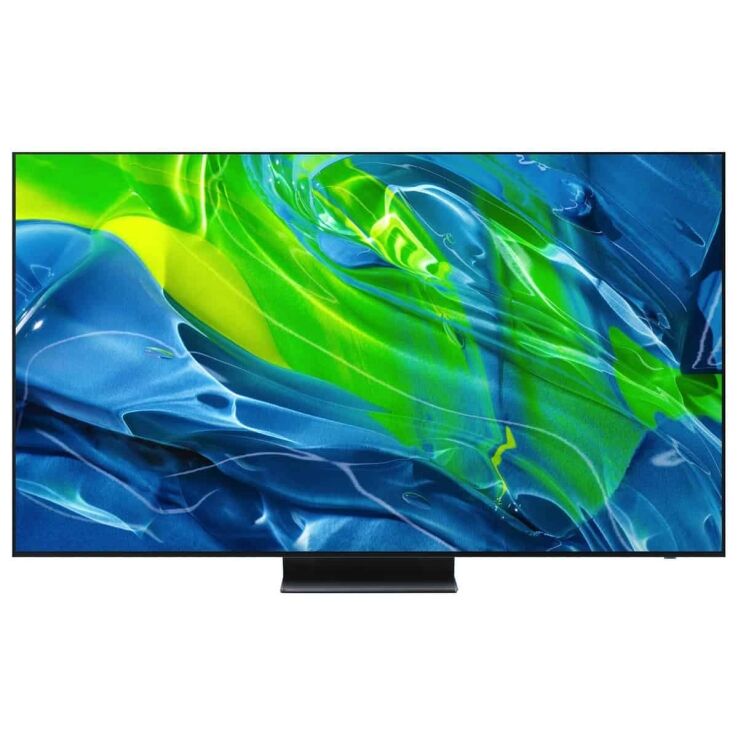
Could Samsung’s S95B be the thinnest OLED yet?
What's thinner than being thin? QD-OLED thin.

Share this article...

WePC is reader-supported. When you buy through links on our site, we may earn an affiliate commission. Prices subject to change. Learn more
While Samsung’s next-gen QD-OLED S95B TV is vowing to become one of the best OLED TVs of 2022, it won’t be any thinner than the OLEDs of today. That being said, Samsung is working hard behind the scenes to create a new QD-OLED manufacturing process that will see next-gen QD-OLED TVs become the thinnest yet.
Samsung’s hugely anticipated S95B is already available for purchase in the US, with Samsung’s official store stocking both 55″ and 65″ variants. Despite the new TV featuring QD-OLED technology, Samsung has refused to acknowledge its existence in the TV’s marketing material. Instead, the Korean brand is classing the TV as a plain old OLED TV – even though the specifications clearly state it will offer “100% color volume with Quantum Dot”.
All being said, according to Samsung’s official product page, the S95B currently measures in at 1.6″ (40mm) – a figure that could reduce exponentially when Samsung completes the new manufacturing process.

Samsung work on new, super-ultra-thin QD-OLEDs
Right now, next-gen QD-OLED TVs are constructed using two glass substrates – one for the OLED layer and one for the QD (Quantum Dot) layer. While that works perfectly fine for the S95B, Samsung believes using inkjets to print the Quantum Dot layer directly onto the OLED layer will reduce the thickness of QD-OLED technology by over half.
Furthermore, it’ll also allow QD-OLED to function in a similar way to OLED – offering rollable and foldable functionality. Korean media states that this new process will not only benefit the thickness of modern QD-OLED TVs, but could also reduce the price of these high-performance next-gen TVs. That could also see a knock-on effect with generic OLED TVs, with prices reducing even further – which in my eyes is a win-win situation.


