
The parts list
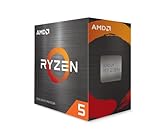
AMD Ryzen 5 5500
Six cores, twelve threads and a cooler in the box for under $100. It's the cheapest sensible gaming CPU you can buy new, and it leaves money for the graphics card, which matters far more for frame rates.

Gigabyte B550M K
A no-frills micro-ATX AM4 board with everything a budget build needs: PCIe 4.0, an M.2 slot and four RAM slots. Spending more here wouldn't make your games any faster.

TEAMGROUP Elite 16GB (2x8GB) DDR4-3200
16GB is still enough for gaming, and DDR4 is currently a fraction of the price of DDR5. That's the main reason the cheaper builds on this page use AM4.

MSI GeForce RTX 3050 Ventus 2X 6G OC
The cheapest new NVIDIA card worth buying. It handles esports games at high frame rates and runs most new games at 1080p on lower settings, with DLSS to help.

KingSpec 512GB NVMe M.2
SSD prices are up too, so the cheapest builds start with 512GB. That's enough for Windows and a few games. Adding a second drive later is easy.
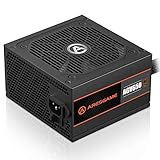
ARESGAME AGV 650W 80+ Bronze
Plenty of power for a budget build with headroom to add a graphics card later.
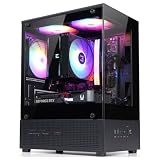
Zalman CUBIX-G Micro-ATX
Compact, cheap and it comes with three fans, so you don't need to buy extra cooling.
Prices are live Amazon US prices, last checked 28 Nov 2026, 12:31, and change often. As an Amazon Associate WePC earns from qualifying purchases, at no extra cost to you. Windows isn't included.
What to expect
- High frame rates in Valorant at 1080p
- A smooth experience on a 144Hz monitor
- Also great for League of Legends, CS2 at low settings and Overwatch 2
Who it's for
Valorant players on a budget, and anyone who mainly plays lighter esports games.
Upgrade path
A faster graphics card such as the RX 7600 turns this into our $800 build and opens up more demanding games.
Rather buy a prebuilt?
If you would rather not build it yourself, these are the closest prebuilt gaming PCs on Amazon right now from established system builders, matched on graphics card and price. We have not reviewed these exact systems, so check the warranty, the full spec and whether Windows is included on the listing before you buy. See our best prebuilt gaming PCs for more.

CyberPowerPC Gamer Xtreme
Core i5-14400F · RTX 5060 8GB · 16GB DDR5 · 1TB SSD
The same class of graphics card as our $1,000 build, paired with a capable Intel CPU and DDR5, ready to use out of the box.
$488 more than building this PC today
What does Valorant need from a PC?
Valorant was designed to run on modest hardware, and it shows. Riot built it to hit high frame rates on low-end PCs, so spending a fortune won't make you a better player. What matters is a fast CPU, enough graphics power for 144fps and above at 1080p, and a high-refresh monitor to show it. This budget build delivers exactly that, with money left over for a good mouse and monitor.
Not focused on Valorant? Our PC builds hub has complete parts lists for every budget from $500 to $5,000.
How the parts work together
The graphics card comes first. In games, the graphics card does most of the heavy lifting, so we start every build by choosing the best card the budget allows, then balance everything else around it. Here that's the MSI GeForce RTX 3050 Ventus 2X 6G OC, with 6GB of video memory. It is an entry-level card, so expect to use lower settings and DLSS in newer games.
The CPU keeps the GPU fed. The AMD Ryzen 5 5500 has 6 cores and 12 threads, which is plenty for gaming. We've matched it to the graphics card so neither part holds the other back: a pricier CPU wouldn't add meaningful frames at this level, and a cheaper one would. If you want to understand the balance in more depth, see our guide to CPU and GPU bottlenecks.
Why AM4? AMD's older AM4 platform uses DDR4 memory, and in late 2026 that's a big advantage: DDR4 costs a fraction of what DDR5 does. The Gigabyte B550M K gives us PCIe 4.0, an M.2 slot for fast storage and everything a gaming PC needs, and the money saved goes into the graphics card instead. AM4 won't get new CPUs, but it already has a great upgrade in the Ryzen 7 5700X3D.
Memory. We've used 16GB of DDR4-3200 in two sticks, so it runs in dual-channel mode. 16GB is still enough for gaming, and adding another 16GB later is cheap.
Storage. 512GB is enough for Windows and a handful of games. With most big games now 100GB or more, a second drive will be a likely early upgrade.
Power. We estimate this PC draws roughly 230W at full gaming load (the CPU's 65W rating plus boost headroom, the graphics card at around 70W, and the rest of the system). The 650W power supply leaves around 65% headroom, which keeps it running efficiently and quietly and leaves room for a more powerful graphics card later. Want to check your own parts? Try our PSU calculator.
Case and cooling. The CPU's included cooler is fine for these parts at stock settings. The Zalman CUBIX-G Micro-ATX comes with fans pre-installed and keeps the build compact.
Pair it with the right monitor
A 1080p monitor is the right match. If you play esports games, a 144Hz or faster panel makes a real difference; see our best 1080p 144Hz monitors and best budget gaming monitors. A monitor that's too slow wastes the frames your PC can produce, and a resolution that's too high leaves you turning settings down.
Best settings for Valorant on this PC
Valorant looks fine on low and medium settings, and that's what most competitive players use for maximum frame rate. Turn on NVIDIA Reflex, set your monitor to its full refresh rate in Windows, and close background apps that compete for CPU time. Because Valorant is CPU-limited at high frame rates, a faster CPU will usually help more than a faster graphics card.
How to upgrade this PC
Every build on WePC is chosen with upgrades in mind. In rough order of value, here's what we'd do next:
- Drop in a Ryzen 7 5700X3D. It fits the same motherboard and its 3D V-Cache gives a big boost in CPU-heavy games. You may need a BIOS update first.
- Go to 32GB of RAM. DDR4 is cheap, so adding a matching 2x8GB kit is an easy win.
- Add a second SSD. Games keep getting bigger. A second NVMe drive is cheap, fast and takes minutes to fit.
- A faster graphics card. The natural step up from the MSI GeForce RTX 3050 Ventus 2X 6G OC is an RX 7600 or RTX 5060. The 650W power supply has the headroom for it.
XMP, EXPO and overclocking
Turn on XMP. Out of the box, memory runs at a slow default speed. Enable the XMP profile in the BIOS so your DDR4 runs at its rated 3200MT/s. It takes a minute and is the single easiest free performance boost on any new build.
Precision Boost Overdrive. Ryzen CPUs are unlocked, and enabling PBO in the BIOS lets the AMD Ryzen 5 5500 boost a little harder if cooling allows. In games the difference is usually small, so treat it as a bonus rather than a reason to buy.
GPU tuning. NVIDIA cards can be tuned in the NVIDIA app, and DLSS is the bigger win: use it in every game that supports it.
Build it yourself or buy a prebuilt?
Building your own PC usually gets you better parts for the money, because you're not paying for assembly and the builder's margin, and you choose every component, including the ones prebuilt makers often skimp on, such as the power supply, motherboard and memory speed. You also learn how your PC works, which makes upgrades and troubleshooting far easier.
A prebuilt makes sense if you'd rather not build, want a single warranty covering the whole system, or find a good deal during a sale. If that sounds like you, see our prebuilt gaming PC recommendations, and compare the parts list with this one before you buy.
What else you'll need
- Windows. The prices above don't include an operating system. You can install Windows 11 for free and activate it later; our guide to installing Windows walks you through it. You'll need a USB stick of 8GB or more.
- A monitor. See the monitor advice above.
- Keyboard, mouse and headset. If you're starting from scratch, our guides to gaming keyboards, gaming mice and gaming headsets have options for every budget.
- Internet. The Gigabyte B550M K doesn't have built-in Wi-Fi. Use an Ethernet cable, which is best for online gaming anyway, or add an inexpensive USB or PCIe Wi-Fi adapter.
Tips for building this PC
Never built a PC before? Our step-by-step guide to building a gaming PC covers the whole process. These are the points that catch most first-time builders out:
- Read the motherboard manual first. It shows exactly which RAM slots to use for two sticks, where the front-panel connectors go and which M.2 slot to use.
- Check the BIOS. If the motherboard's BIOS is older than your CPU, it may need an update before it will boot. Many boards can update from a USB stick without a CPU installed; see our guide to updating your BIOS.
- Build outside the case first. Fitting the CPU, cooler, RAM and SSD to the motherboard on its box makes everything easier, and you can test it boots before it goes in the case.
- Don't forget the CPU power cable. The 8-pin connector at the top-left of the motherboard is the most common reason a first build won't start.
- Plug your monitor into the graphics card, not the motherboard. It's an easy mistake, and it means you're not using the GPU you paid for.
- Take your time with cables. Tidy cables improve airflow and make upgrades easier later. Our cable management guide has tips.
Our verdict
Valorant doesn't need an expensive PC, and this build proves it. Spend what you save on a high-refresh monitor and a good mouse; they'll make more difference to your game.
Why are PC parts so expensive right now?
Graphics card and memory prices rose sharply through 2026 as AI data centres bought up GPU and DRAM supply. A 32GB DDR5 kit that cost around $100 in 2024 now costs more than $450, and most graphics cards sell well above their launch prices. We've built every PC on this page around what parts actually cost today, not their list prices, and we update the builds as prices move.
Other PC builds
Who put this build together

Shaun, with a computer science degree and 15 years of computer experience, has been passionate about competitive FPS gaming since the mid-2000s.
How we chose these parts
We start with the best graphics card the budget allows, then balance the CPU, memory, storage and power supply around it, checking socket, memory, power and size compatibility for every part. Picks are based on specifications, independent benchmark data and current prices, not on which retailer pays the most. Read our how we test and research and editorial policy pages.
Sources
- Prices and availability: Amazon.com, refreshed every few hours (last checked 28 Nov 2026, 12:31)
- Specifications and power ratings: AMD, NVIDIA and each component maker's official product listings
- Graphics card performance context: TechPowerUp GPU Database
- Popular gaming resolutions and hardware: Steam Hardware & Software Survey
- Game system requirements: the publisher's official requirements for the game
What changed
- Rebuilt for late-2026 prices and added a full buying guide. Rechecked every part against current prices.
FAQs
What PC do you need for Valorant?
Riot's high-end spec for 144fps is an Intel Core i5-9400F with a GTX 1050 Ti, so Valorant isn't demanding. A modern six-core CPU like the Ryzen 5 5500 helps you push well beyond 144fps.
Is Valorant CPU or GPU heavy?
Valorant leans more on the CPU, especially at high frame rates. That's why we haven't overspent on the graphics card here.
Does this build include Windows?
No. The prices on this page are for the hardware only. You can download and install Windows 11 for free from Microsoft and buy a licence to activate it later.
Is it cheaper to build or buy a gaming PC?
Building is usually cheaper for the same performance, because you're not paying for assembly or the system builder's margin. Prebuilts can be good value during sales and come with a single warranty, so it's worth comparing parts lists.
How long does it take to build a PC?
A first-time builder should allow two to four hours, plus time to install Windows and drivers. Experienced builders can do it in about an hour.
Will these prices change?
Yes. Prices on this page are pulled live from Amazon and refreshed every few hours, and PC part prices move a lot. We update the parts lists themselves when prices shift enough to change our recommendations.
What is a good prebuilt PC for Valorant?
If you would rather not build, the closest prebuilt we would consider right now is the CyberPowerPC Gamer Xtreme (Core i5-14400F, RTX 5060 8GB, 16GB DDR5, 1TB SSD). Prebuilts usually cost a little more for the same performance, but they come assembled with a single warranty. Compare it with the parts list on this page before you buy.