

ASUS TUF Gaming RX 7800 XT OC

Pros
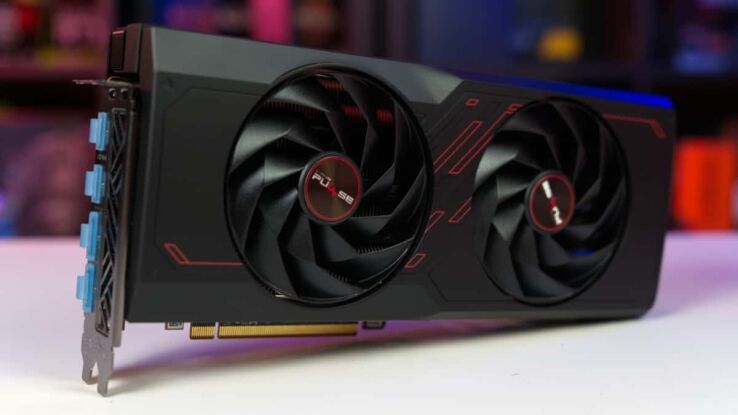
Axial tech and opposite spin fans provide plenty of airflow for cooling with cutouts for it
Metal build provides good convection and rigidity to the build
Cons
More expensive choice in the range of models

Deciding between the two, we see which you should consider between the RX 7800 XT and RTX 4070

WePC is reader-supported. When you buy through links on our site, we may earn an affiliate commission. Prices subject to change. Learn more
With plenty of cards available now, you might be wondering which one to go for, and with AMD versus Nvidia keeping up, there is definitely a lot to choose from. With the recent release of the mid-range lineup things have gotten more interesting and we see how the RX 7800 XT vs RTX 4070 compare.
Out of the two, the RTX 4070 is the older choice around, since Nvidia didn’t hold back its range of graphics cards. Released in April 2023, it was certainly one of the cheaper options in the RTX 40 series. Whilst the RX 7800 XT certainly took its time to release, the gap of the RX 7000 series came out in September of the same year. With that let’s see what the differences are between them and which might be the best GPU for you.
Axial tech and opposite spin fans provide plenty of airflow for cooling with cutouts for it
Metal build provides good convection and rigidity to the build
More expensive choice in the range of models

Impeccable build quality
Triple fan cooler design
Pricey
When comparing two GPUs, the processor and its function are at their core. However, it’s not that simple to compare if the two are not based on the same architecture as between manufacturers or different generations. This means in the case of the RX 7800 XT vs RTX 4070 we can see what they’re made up of without a good comparison.
Looking at the RTX 4070, it is part of the Ada Lovelace architecture and in particular, features the AD104-250 GPU inside of it. Made with TSMC’s 5nm process, it has a die size of 294mm² which has onboard 35.8 billion transistors. Whereas the RX 7800 XT is in the RDNA 3 family, created with the Navi 32 XT variant. Made up of TSMC’s 5 and 6nm process for the GCD and MCD respectively. This provides 28.1 billion transistors on the combined 346mm² dies from the multi-chip design it utilizes.
| RX 7800 XT | RTX 4070 | |
|---|---|---|
| GPU | Navi 32 XT | AD104-250 |
| Architecture | RDNA 3.0 | Ada Lovelace |
| GPU process | TSMC 5 & 6nm | TSMC 5nm |
| Shading units | 3,840 | 5,888 |
| Base clock speed | 1,295 MHz | 1,920 MHz |
| Boost clock speed | 2,430 MHz boost, 2,124 MHz game | 2,475 MHz |
| VRAM | 16GB GDDR6 | 12GB GDDR6X |
| Memory bandwidth | 620.8 GB/s | 504.2 GB/s |
| Memory bus | 256-bit | 192-bit |
| Memory clock | 2,425 MHz/ 19.4 Gbps | 1,313 MHz/ 21 Gbps |
| TBP | 263W | 200W |
When it comes to the rest of the graphics card, there are some specs we can compare when it comes to the RX 7800 XT vs RTX 4070. Although the RTX 4070 has more shading units with its CUDA cores, the stream processors of the RX 7800 XT might be better at it so it’s best to see the performance of them. Especially with the similar clock speeds expected from the factory.
As for the VRAM, the AMD GPU opts for more capacity over the version with 16GB of GDDR6 instead of GDDR6X. That means it clocked lower at an effective 19 Gbps, compared to the 12GB of the Nvidia graphics card that can run at 21 Gbps instead. However, the 7800 XT has a large memory bus of 256-bit instead of the 192-bit of the 4070 which means the bandwidth of the former is still higher even with the slower clock.
The last consideration of the specs between the two is the TBP or total board power of the cards. This is how much power it takes to run the cards, and what kind of electricity bill and heating from it you might get. Overall the Radeon card is much higher, with a 31% higher rating it could run hotter and more expensive. Although there is a possibility they aren’t calculated in a similar fashion.
When it comes to picking out a card, the performance is the majority of the focus. We look to the Techspot review of the 7800 XT and get a comparison of how it holds up against the RTX 4070. With a 15-game average across three resolutions, you can get a good understanding of the capabilities of the two GPUs.
At 1080p, the 7800 XT leads over the 4070 with 147 compared to 143 FPS. 1440p follows a similar trend with the GPU achieving 108 compared to 102 FPS. 4K also has the RX card on top with an average of 62 compared to 57 FPS, showing how it beats the RTX card across the resolutions. That certainly makes it a better choice for rasterization, with a performance of 3-8% higher, however, that changes in ray tracing.
When it comes to fancy lighting, the AMD card still unfortunately loses out, with the ray tracing cores not as effective as the RTX ones. In the same review at 1080p, the 7800 XT at 1080p averages 94 compared to 105 of the 4070, at 1440p that drops to 69 vs 76, while 4K provides a 38 vs 41 FPS average. Overall it’s not as big of a boundary as in previous generations and provides a playable experience that certainly still gives a good performance even with a 10-7% lower average.
Another decision maker for buying a new graphics card is how much you’re going to pay for it. This also provides the value of the cards for their performance and quite the consideration as to which you choose. More recently, Nvidia’s pricing has been rather steep, and AMD as the only other real competitor does offer something a bit lower priced.
We compare the price the cards launched at, which may not be how much they come to retailers when you buy them. Here are the MSRP options for the two:
That does make the AMD option a lot cheaper, by $100. Although we can expect the RTX 4070 to get a sale or drop in price that might make it closer to the AMD card. It isn’t unexpected though as AMD does offer the better value option most of the time.


Ridged backplate provides 33% more surface area for heat dissipation
A quieter choice of model
More expensive than the base price

Impressive build quality
Brilliant aesthetic
Inexpensive
only a dual-fan design
Overall when looking at which to choose, there is plenty to consider. Out of the two based on the performance and price, the RX 7800 XT is the choice to go for. If the ray tracing performance or AMD drawbacks aren’t too big for you it is the better one out of the two.
Although the RTX 4070 is a greatly capable GPU all on its own, but clearly overpriced for its launch price. It has all the benefits of Nvidia but you have to pay all that extra for it. If ray tracing, video encoding, and frame generation then it might be worth it for you. Otherwise, the AMD option is a good choice in general.

Sapphire Pulse AMD Radeon RX 7900 XTX

Sapphire Nitro+ AMD Radeon RX 7900 XTX Vapor-X Gaming Graphics Card

MSI Gaming GeForce RTX 4070 Ti 12GB GDRR6X

XFX Speedster SWFT319 Radeon RX 6800 Core Gaming Graphics Card

ZOTAC Gaming GeForce RTX 4070 Ti Trinity OC

MSI Gaming GeForce RTX 3090

GIGABYTE GeForce RTX 3060 Gaming OC

XFX Speedster MERC310 AMD Radeon RX 7900XTX Black Gaming Graphics Card

MSI Gaming GeForce RTX 4080

MSI Gaming GeForce RTX 4070 Ti
Trusted Source
WePC’s mission is to be the most trusted site in tech. Our editorial content is 100% independent and we put every product we review through a rigorous testing process before telling you exactly what we think. We won’t recommend anything we wouldn’t use ourselves. Read more


