Is the RX 7900 XTX futureproof?
Investing a significant cost in a GPU can be daunting so how long can it last you?

Share this article...

WePC is reader-supported. When you buy through links on our site, we may earn an affiliate commission. Prices subject to change. Learn more
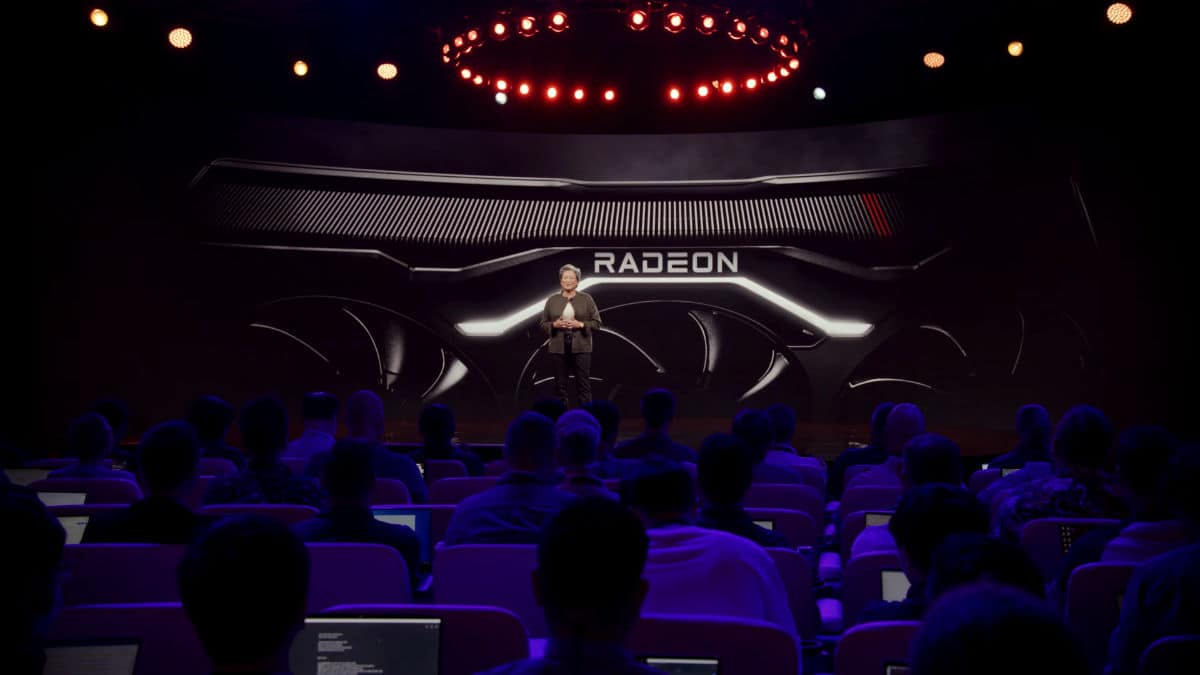
The AMD Radeon RX 7900 XTX and RX 7900 XT, which are based on the chip manufacturer’s new RDNA 3 architecture, are two of the company’s newest gaming graphics cards. The cost of the RX 7900 XTX is $999, while the RX 7900 XT is $899. The cards will be offered beginning on December 13 and we wonder if the RX 7900 XTX is futureproof.
Chiplets will be used in RDNA 3, with a primary Graphics Compute Die and up to six MCDs (Memory Cache Dies). In addition, the architecture has undergone a great deal of development, including more compute units and GPU shaders than in the previous iteration.
Fundamentally, AMD is still focused on power and energy efficiency, and RDNA 3 is intended to deliver a 50% increase in performance per watt over RDNA 2.
This contains a 5nm Graphics Compute Die with a frequency of 18% higher and a performance-per-watt of 54% greater than the prior iteration.
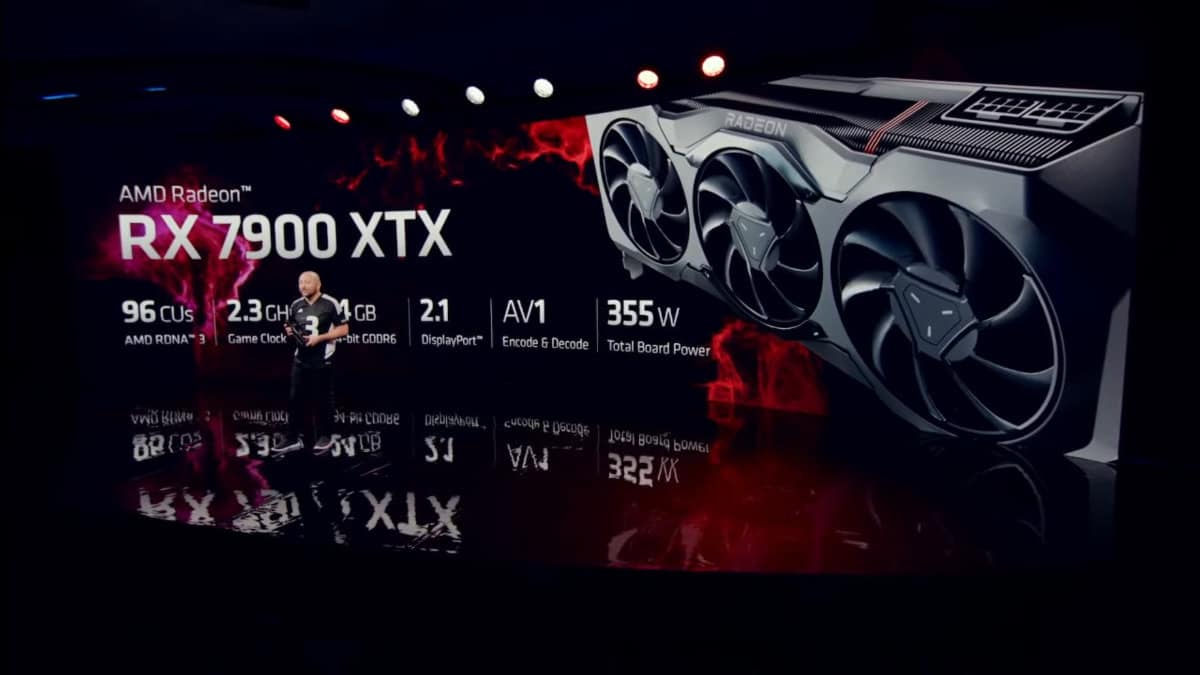
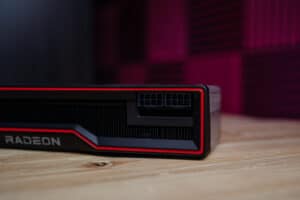
As a result, the RX 7900 XTX and the RX 7900 XT have board powers of 355 and 300 watts, respectively. AMD was quick to emphasize that the cards won’t need unique power connectors.
Additionally, there are GDDR6 memory controllers (no GDDR6X as AMD found it to be too power-hungry) and a 96MB 2nd generation Infinity Cache to provide reduced latency and power consumption than using DRAM. The memory subsystem is also housed on 6nm memory cache dies.
The new GPUs offer up to 61 Tflops of computing power, which is a 2.7x improvement over RDNA2’s 23 Tflops, and contain 165% more transistors per square millimeter. According to AMD, this will provide an average 1.7x improvement in 4K gaming performance over the RX 6000 series.
While the RX 7900 XT will only have 20GB, the RX 7900 XTX will have 24GB of GDDR6 memory. Both will have the new DisplayPort 2.1 interface, which will give 4K and 8K displays more bandwidth and faster refresh rates.
The FidelityFX Super Resolution 3 with fluid motion upgrade, which will give up to twice the frame rate gains of FSR2 and be available on PC in 2024, was also unveiled by AMD. With that said, the AMD RX 7900 XTX will provide full future proofing for the years to come.
It will be compatible with the upcoming PCs in 2024 and beyond, as mentioned by AMD. The RDNA 3 is designed to play games at 4k and 8k. It will be able to support high-end gaming easily.